
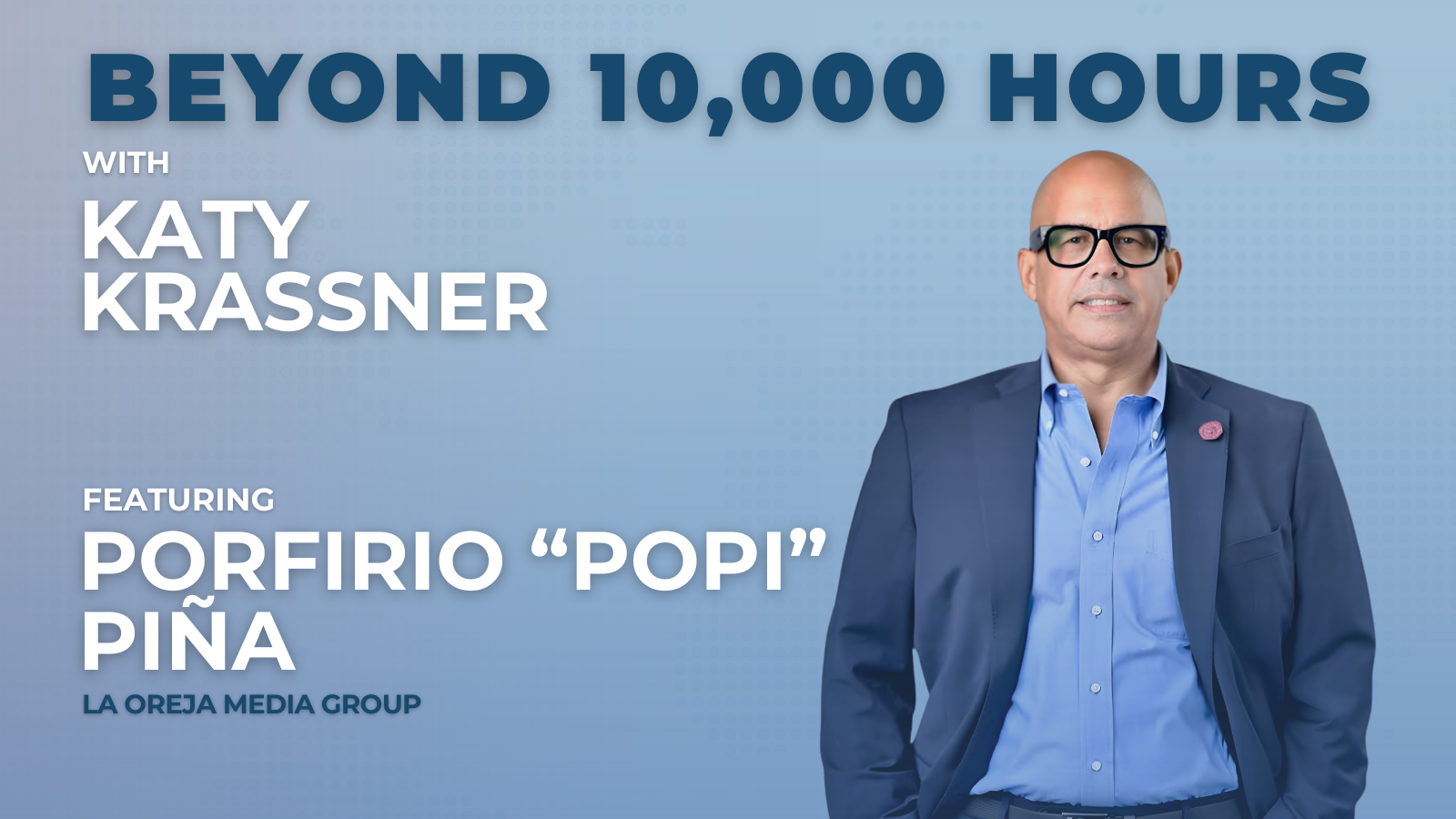
“Young, Latin and proud”
I grew up in the Dominican Republic. Initially, my interest in music came from when I was very small, listening to the boleros (a slow-tempo, deeply romantic genre of Latin American music) my aunt Tete and mom Josefa Emilia were listening to. They had a record player and would play a lot of vinyl on weekends when the family got together. I fell in love with music. As a boy, I took piano lessons and learned to read and write music before I even learned to play. When I started listening to music, I started collecting vinyl. In fact, I remember the very first 45RPM I bought: “Querube” by Trio Los Condes. I thought it was a very romantic song. From there, I moved on to disco, rock, and jazz, then back to a focus on Latin music.
I moved to New York City when I was 7, and there were so many record stores! There was Tower Records, record stores in the Village, on 42nd Street and Broadway (subway station), near my apartment on 135th, and in Penn Station! When The Sugarhill Gang came out in 1979 with “Rapper’s Delight,” it blew my mind. I always gravitated toward music that was different, not what was the trend. In fact, I was listening to Afrika Bambaataa in 1978!
“I sell anything, I’m a hustler, I know how to grind.”
After high School, I went to college and studied computer science, which was not my passion. My mother said it was the ‘career of the future,’ but I wanted to be in the music business. I started to DJ – carrying my vinyl crates – and even though I wasn’t making a lot of money, I loved it. I worked at the famous Ansonia building on the Upper West Side, where the American Musical and Dramatic School was housed. There, I became the assistant resident manager. Around this time, an opportunity presented itself to me with the merengue band Proyecto Uno, a New York local band that became the Dominican hip-hop, merengue, and house group fronted by Nelson Zapata. They needed a manager and money, and I could provide both at the time.
Nelson and his producer/engineer, Pavel de Jesus, played me a reinterpretation of Black Box’s “Everybody Everybody,” which I liked, but told them they needed a rapper on the single, so they put in Magic Juan. We pressed 1,000 copies of the single called “Todo El Mundo (Everybody).” For two years, we worked that single at the clubs until Nelly Carrion aka La Muñequita at WKDM radio, a full-time Spanish-language station, played the song at 12:30am and our record started to sell. We had sold maybe 300 copies in 2 years, suddenly everyone wants the single, and we get a record deal. We believed in the song so much that we just never gave up. Between radio and the Club DJs, we broke the single, and a trend started. The band released three more singles and then we released their first album, Todo el Mundo.
“What goes up must come down.”
At some point, I realized I was not being paid. Like many people new to the music business, we had signed a bad deal because we didn’t know enough about record deals and music publishing. I was lucky enough to find some mentors: Michael Pantoleoni, a music attorney, Barry Weiss from Jive Records, and William Krasilovsky, one of the authors of “This Business of Music.” They took me under their wing and started teaching me. I learned how important music publishing and production houses are and realized that not many artists paid attention to this. I learned about PRO, splits, music sheets, and synchronization. At the time, the songwriter’s name wasn’t even in the liner notes! Now there are 20 people listed under songwriting for a hit song, when probably only 2 of them really wrote it. I believe the songwriter is the value of music, and I immersed myself in learning as much as I could. Pavel, Nelson, and I started our own music production company and record label, called PNP Records & Productions. Then Nelson left, and we rebranded as Double P Music. We were music publishers, producers, and managers.
“You just call on me brother, when you need a hand”
1999 was a year of change for me. My dad passed away, and I decided to spend some time back in the Dominican Republic. I took a break from music to regroup. In 2001, a friend of mine, Alex Massuci, came to DR and told me about a Cuban artist called Carlos Manuel, a good-looking, talented kid who played piano, percussion, and trumpet, who could also dance, sing, and write his own songs. He told me that Chris Blackwell was interested in Carlos and suggested that I join the team. I said the only way I will come back to music is if Chris Blackwell comes to the Dominican Republic to talk to me. Chris was my idol! And sure enough, he came, and we went to Cuba, where I met Carlos.
I worked with him for a year, but I didn’t realize the politics involved with this Cuban artist. Latin radio simply wouldn’t play a Cuban artist who resided on the island. We were having success in England, Spain, and France, but couldn’t break Carlos in in the US. It was very frustrating, so I left and went to Miami, where I worked for three years (2002-2005). I managed some successful songwriters, and I used to pitch songs to artists. I would go to Crescent Moon Studios (owned by Gloria and Emilio Estefan), hear what their songwriters were working on, and pitch the songs to labels. It was an amazing time; I was part of the magic.
During this time, the head of Latin Music at BMI tried to hire me, but I didn’t want to go back to New York City. She kept at me and brought me to New York for a meeting with their Senior VP, Phil Graham, which lasted 8 hours. We really connected over our shared love of music, and they were serious about building their roster of Latin songwriters. They literally made me an offer I couldn’t refuse, and I started working with BMI in 2005, where I stayed for 8 years.
“Lately I’ve been growing older, up, and wiser”
In 2012, I started La Oreja Media Group, a music publishing, record label, digital distribution, and management company based in the Dominican Republic. I met my partner, Alexis Brugal, when I was at BMI. He managed a successful songwriter and a Latin pop-rock band, “Taxi Amarillo,” and I had just started at the company. He came to meet with me about his client, and we became the best of friends. We started La Oreja because we saw an opportunity in the Dominican Republic to distribute music to DSPs. Our first client was Pavel Núñez, a top singer-songwriter who is one of the Dominican Republic’s most significant artists. Our second signing was Ilegales, a Latin Grammy and Grammy-nominated Dominican group that I used to manage back in 1995.
After some time, we took a different direction. We wanted to preserve Dominican heritage music, focusing on merengue, salsa, bachata, boleros, and more. We are now buying and distributing the catalogs of Dominican artists. The only two current artists we work with are Menteabierta, a Dominican urban-salsa singer whose first single, “Eso Da Pena (El Capo),” came out in 2024 and spent 8 weeks in the #1 spot on the Monitor Latino salsa chart, and my godson Ansel Mauricio , an incredibly talented 16 years old Dominican pianist, composer, and arranger known for his work in Latin Jazz.
When I was a manager, I would look for two things in my signings: character and perseverance. To quote Pitbull, success is 90% hard work and 10% talent. I stopped managing artists last year, but it was always easier to work with people who know what they want and are willing to do the work to get there. It seems many young artists have unrealistic expectations, so I am happy focusing on getting music from the 1980s and 90s heard in 2026.
“No regrets, they don’t work”
Technology has flattened the world in music. Decades earlier, you could tell a white lie when trying to break an artist by taking them to Chicago and saying, ‘they’re really blowing up in New York.” Who would know? You can’t do that anymore because it’s a click away from the truth! On the plus side, an unsigned artist can get massive right away. 150,000 new songs come out every day; every release is worldwide. If a song comes out in Australia, you can still stream it in New York.
There’s a lot of clutter, and it doesn’t seem like there’s any artist development anymore. There’s a lot of trend-jumping but no real development. No one is spending money to launch artists so they can have a sustainable career. I think more money needs to be spent on developing talent in traditional media. Record labels are signing influencers, looking for a quick hit, and then they fade.
Play MPE is our global delivery system, digitally distributing our promotional music and ensuring our tracks reach top radio programmers, curators, and reviewers worldwide. Giving us data-driven insights into exactly who is listening to and downloading our music. It’s such an important tool and a smart investment.
If I were a musician starting out, I would read everything I could. I wouldn’t sign the first agreement or contract given to me; I would make sure I had a good attorney and verify everything I read with a secondary source. I wouldn’t rush my music to hop on a trend, and I would work 10x as hard as everyone else. But, there’s nothing I would do differently. If I had the opportunity to come back as myself someday, I’d make all the same mistakes because that’s how you learn. I don’t have any regrets.