
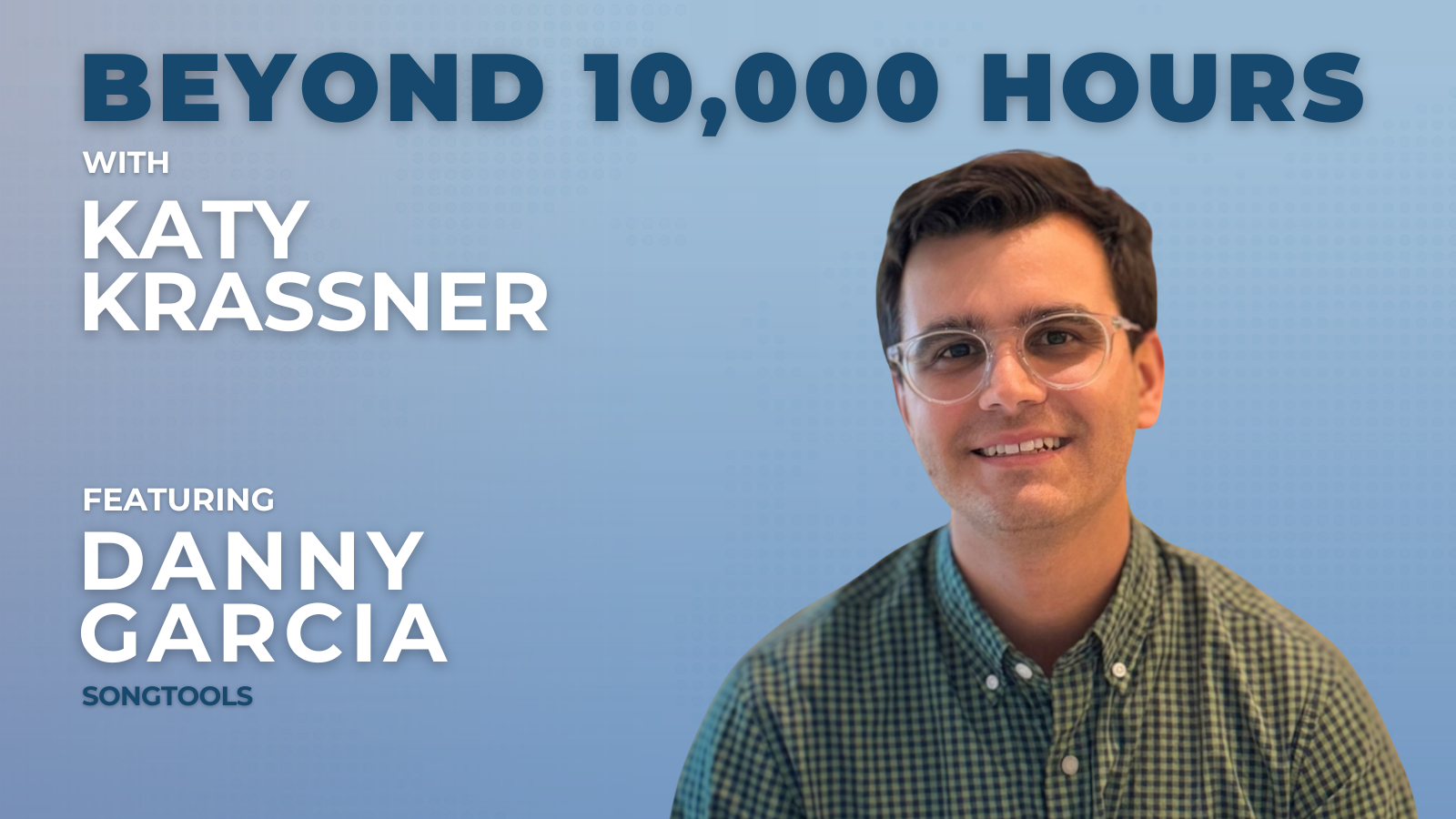
“But on the sneak, Miami bringin’ heat”
I grew up in Miami, which is where I still live. I started to play guitar in the 2nd grade and participated in music camps and school bands. In high school, I was always in a band with friends, playing classic rock at parties and events. I have been a music creator pretty much forever, which is what led me to want to work in the music industry. A lot of the pain points I felt as a musician myself were things I wanted to expIore further. I would wonder, is this something that affected just me or did a lot of young musicians feel the same way? A question I always heard was, “I am releasing a song; how do I get people to listen?”
In 2016 I launched KURRENT MUSIC, a music blog that people could sign up for and also participate in, kind of like MEDIUM but for music. Fans could post articles about their favorite artists and albums. I started it because I loved music and was pitching my stuff out to blogs. I ended up creating something that let me do it myself and it caught on.
“The things I did not know at first I learned by doin’ twice”
I went to New York University, specifically NYU Tisch School of the Arts Clive Davis School of Recorded Music. It is a very rigorous program, with lots of very talented people, I quickly learned that I was better suited to help an artist than to be an artist. I initially thought I was going to be a producer, and then a friend of mine from Miami called and said, “I bought all these SoundCloud pages, do you want to help me manage them?” SoundCloud launched a ‘repost” or share feature in 2012 that allowed independent curators to champion music they liked. People started buying SoundCloud pages that had substantial followings and would charge indie artists and labels anywhere between $20.00 and $100.00 per track to be reposted. At some point, SoundCloud cracked down on re-post chains, but for a while, it was what everyone was doing.
At the same time, I started to manage my college roommate’s music career. This was really awesome because not only did we land some great stuff for him like “New Music Friday” and book shows all around NYC, but because I got the opportunity to learn about the live side of music, which was invaluable. Working with him taught me a lot about what types of marketing and promotions are valuable.
“You can make it yourself and feel the thrill, making use of your knowledge craft and skill”
I was an intern at United Masters, a music tech platform that helped independent artists, and was doing a lot of playlist work for them. I began to see a big disconnect between what labels and artists were trying to get out of playlisting and how fragmented it was. I thought if I could build a tech solution that can help artists and labels get in front of verified playlists, it would make the process easier. That idea was the first iteration of SongTools, then called Playlister Club, an online music discovery and playlist promotion platform designed to connect independent music artists with independent playlist curators. I basically gave the tool to curators for free and then once they gave me their feedback, I got it into the hands of independent artists and record labels. The whole point from the beginning was to help emerging artists take promotion into their own hands. The timing was right, plus we were able to provide data. If a Playlister wasn’t interested in the track, it was really helpful to find out the reason why.
My partners and I not only listened to what users were saying but as an artist myself, I was able to pour all my experiences into the platform. Our marketing funnel has the playlists at the top, but we also have an ad funnel that drives fan engagement. Playlisting doesn’t put people in seats, targeted advertising does. As a marketing guy, I always tell artists to follow engagement. Choose a handful of metrics and monitor them obsessively. That’s where growth happens.
A label may want to pitch an artist to a playlist, work on SEO and do some Tik Tok ads, a smaller act may just want to send their song to a cool playlist. Test things, see what works and what doesn’t, but don’t get too caught up in a numbers game. You want to build your fanbase and have followers stick with you. I also recommend that people ‘test’ campaigns by doing a week and then examine the results. That helps you learn what is working for your song and what isn’t.
“I thought you were singing your heart out to me”
A change I’ve seen in the past ten years is while algorithmic playlists are great for the casual listener, and user generated ones are still relevant, and sub-genres are really important. An algorithm doesn’t recognize sub-genres or appeal to hyper-focused listeners. Independent playlists have the ability to go super niche which has resulted in strong engagement rates. You might be surprised at what listeners search for when looking for mood-based playlists – yes, we’ve seen “Walking home in NYC in the rain.” Looking at how many sub-genres there are now, even a developing artist can find their niche. Technology helps to match the right audience with the right song, which has been great for smaller artists.
Another change that I already mentioned is that there is more of a focus on engagement rather than numbers. Everyone used to chase numbers, wanting more listeners and more streams, but over the past 6 or 7 years, people have become savvier. It’s great to get listeners but how many saves does an artist have? How many repeat customers? If 100 people listened to your first single, and then 25 of those people stream your 2nd single, that’s a win you didn’t have to pay for. Engagement has become a priority.
“Let that stage light go and shine on down”
SongTools currently has 20,000 playlist curators, a network of over 150 million followers and more than 2 million playlist placements. We just started to work in the catalogue space. Labels or artists can onboard into our managed services where we help create custom solutions for catalogue artists on Instagram, Facebook, YouTube and Tik Tok. We also launched VIDEO SIGNALS for frontline releases, which allows artists to target specific playlists and send Curators a personalized video. SIGNALS also records the Curator listening and reacting to the song. We want to bring a human element back to curation. This helps both the artist and curator communicate in a real way.
I am really proud of the work we have done so far with SongTools, how it has evolved and continues to grow. And yes, it was amazing to be included in the Forbes ’30 Under 30’. One of the writers heard about me, researched me and choose me! It’s a huge validation.
Are you interested in trying out SongTools for yourself?! Learn more here.